Fall 2026 Fine Art Catalog Is Here




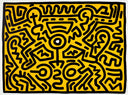
Untitled (Pop Shop IV - D), 1989
Price on Request
Details
Medium: hand-signed silkscreen
Year: 1989
Edition: 250
Sheet size: 13.5 x 16.5"
Image size: 11.5 x 14.5"
Framed size: 22 x 25"
Signature: signed and dated 'K. Haring '89' and annotated lower right vertical
Year: 1989
Edition: 250
Sheet size: 13.5 x 16.5"
Image size: 11.5 x 14.5"
Framed size: 22 x 25"
Signature: signed and dated 'K. Haring '89' and annotated lower right vertical
About the Work
"Untitled (Pop Shop IV - D)" is a silkscreen on wove paper created by Keith Haring in 1989 for his 'Pop Shop IV' series. From the edition of 250, the artwork is signed and dated 'K. Haring '89' and annotated lower right vertical. The artwork is framed in a contemporary black frame and has a framed size of 21.5 x 24.5". The artwork ships framed and accompanied by a certificate of authenticity.
Keith Haring’s "Pop Shop" series stands among the most emblematic achievements of his career, encapsulating both his visual language and his philosophical commitment to accessibility. Initiated in the mid-1980s and culminating in "Pop Shop IV" in 1989, the series reflects Haring’s desire to dissolve the barriers between high art and popular culture. Named after his retail space in downtown New York, the Pop Shop was conceived as an extension of his practice, a place where art could be encountered, purchased, and lived with by a broad public. The prints that bear its name function as both artworks and democratic objects, reiterating Haring’s belief that art should exist beyond the confines of the gallery.
"Pop Shop IV," produced in the final year of Haring’s life, represents a mature distillation of his iconography. Executed in screenprint, the four-print series features his signature vocabulary of simplified figures, bold contour lines, and radiant energy marks. These compositions are deceptively direct. Beneath their clarity lies a complex symbolic system that addresses themes of life, death, transcendence, and human connection. At this late stage, Haring’s work achieves a heightened balance between joy and urgency, reflecting both the vitality of his imagery and the personal and social challenges that informed his final years.
"Pop Shop IV-D" centers on another of Haring’s most iconic motifs: the radiant baby. In this composition, two figures lift the child upward, their bodies forming a supportive structure beneath it. The infant, surrounded by emanating lines, appears as a source of pure energy and light. Throughout Haring’s oeuvre, the radiant baby functions as a symbol of life, potential, and uncorrupted existence. It is both a literal representation of birth and a more abstract embodiment of creative force.
The act of lifting the child introduces themes of care, collective responsibility, and elevation. The figures do not simply present the baby; they uphold it, suggesting that life itself is sustained through communal effort. This imagery resonates with Haring’s broader commitment to social engagement and his belief in the power of unity. The composition is structurally simple, yet its meaning is expansive. The upward gesture implies hope and continuity, even in a moment marked by uncertainty and loss.
The works within "Pop Shop IV" articulate a vision of interconnectedness that is central to Haring’s legacy. His figures, stripped of individual identity, operate as universal archetypes. They invite recognition rather than distance, encouraging viewers to see themselves within the imagery. The repetition of motifs such as the angel and the radiant baby creates a symbolic language that is immediately legible yet open to interpretation.
As both a continuation of the Pop Shop ethos and a culminating statement of his artistic vision, "Pop Shop IV" occupies a significant place within Haring’s oeuvre. It embodies his insistence that art can be at once accessible and profound, joyful and deeply engaged with the realities of its time. Through these images, Haring offers not only a reflection of the late twentieth century but also a lasting meditation on life, connection, and transcendence.
About the Artist
Untitled (Pop Shop IV - D), 1989
Regular price
$98,500.00
SELECTED WORK
MORE FROM THIS ARTIST
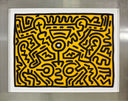
Growing #3, 1988
Price on Request

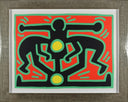
Growing #2, 1988
Price on Request
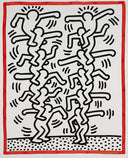

"People Ladder" (Three Lithographs), 1985
Price on Request


261 - Free South Africa (#2), 1985
Price on Request
Untitled (Pop Shop IV - D), 1989
Price on Request
262 - Free South Africa (#3), 1985
Price on Request
Drawings for Paris Review, 1982
Price on Request
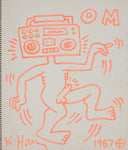
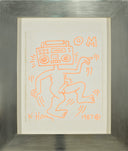
Untitled (orange drawing), 1987
Price on Request
Start your collection with guidance you can trust
For nearly 50 years, we’ve helped new collectors find artwork they love and understand the stories behind each piece. Our gallery consultants offer personalized guidance, whether you’re exploring originals, limited editions, or discovering an artist for the first time. Visit your nearest gallery to start collecting with confidence.

Frequently Asked Questions
Your artwork comes with a Certificate of Authenticity (or Letter of Authenticity), professional packaging, and insured delivery.
We ship fully insured, using trusted carriers. Each piece is professionally packed to ensure safe arrival. Shipping times vary based on the location of the art, its destination, and whether or not it is framed (ready to ship) at the time of your purchase.
All our works come beautifully framed. Some print multiples may have framing options if we have unframed editions available in our warehouse. Our in-house framing provides high-quality moulding, acid-free materials and either UV plexiglass or framer’s grade acrylic. High value works may be framed in custom, closed-corner frames, and are often framed in Optium museum glass for enhanced clarity.
No, Martin Lawrence Galleries does not provide appraisal services. To ensure that appraisals are fully independent and unbiased, it is best practice for them to be carried out by certified appraisers who have not had prior involvement with the sale or handling of the artwork. For that reason, we do not appraise artworks that we handle, and instead recommend that collectors seek an independent, certified appraiser.
No, we own the vast majority of our inventory and do not seek out consignments from Sellers.
Yes, if you purchase from a local gallery, your consultant will be happy to assist you with hanging the artwork in your home.
Martin Lawrence Galleries has seven galleries across the country where you may be able to see the exact piece you are interested in. Print and sculpture multiples are more likely to be in several places for possible viewings whereas unique artworks will be constrained to one location. We are happy to facilitate your visit to one of our galleries if that is convenient for you. We can also take videos and extensive photos if a visit is not possible. Please contact us at martinlawrencegalleries.com.
We have over 50 years of experience, seven gallery locations across the United States, and a track record of connecting collectors with the right artwork.
No. Our consultants are here to guide you through the process, answer your questions, and make buying art simple and rewarding.
We encourage you to buy what you love. Our consultants will help you find the right piece that fits your taste and collection.
Please visit our page on specific instructions on how to take care of your artworks. Care Instructions
We stand by our artwork. Please review our detailed return policy here.
OUR GALLERIES

Costa Mesa, California
3333 Bear Street
949-759-0134
Mon–Sat: 11:00am – 8:00pm
Sun: 11:00pm – 6:30pm

Las Vegas, Nevada
3500 Las Vegas Boulevard South
702-991–5990
Sun – Thurs: 10:00am – 11:00pm
Fri – Sat: 10:00am – 12:00am
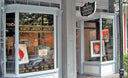
New Orleans, Louisiana
433 Royal Street
504-299-9055
Mon-Sun: 10am - 6pm
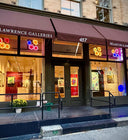
New York, New York
457 West Broadway
212-995-8865
Mon – Sat: 10:00am – 7:00pm
Sun: 11:00am – 7:00pm
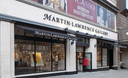
San Francisco, California
366 Geary Street
415-956-0345
Mon-Sun: 10am - 6pm
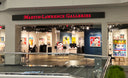
Schaumburg, Illinois
5 Woodfield Mall, Second Level Nordstrom Wing
630-954–3033
Mon – Sat: 10:00am – 9:00pm
Sun: 11:00am – 6:00pm