Fall 2026 Fine Art Catalog Is Here


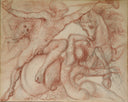
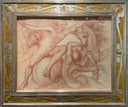


Le Jugement Dernier (The Last Judgment), 1949
Price on Request
Details
Medium: sanguine and pencil on paper
Year: 1949
Image size: 23 x 29"
Framed size: 33 x 38.5"
Signature: signed and dated '1949 Dali' at lower center
Year: 1949
Image size: 23 x 29"
Framed size: 33 x 38.5"
Signature: signed and dated '1949 Dali' at lower center
About the Work
"Le Jugement Dernier (The Last Judgment)" is a sanguine and pencil on paper drawing created by Salvador Dalí in 1949. The artwork is signed and dated '1949 Dali' at lower center. The artwork ships framed in a custom closed-corner ornate silver and gold-tone frame and with a framed size of 33 x 38.5".
By the late 1940s, Salvador Dalí had reached a decisive turning point. The atomic bombings of 1945 reshaped his understanding of reality, leading him to formulate what he called “nuclear mysticism.” The discovery that matter could be split and transformed confirmed for Dalí that all existence was in a state of flux. He responded by returning to religious subjects and classical technique as vehicles for expressing metaphysical truth.
“Le Jugement Dernier” (The Last Judgment), executed in sanguine and pencil in 1949, stands as a pivotal work from this moment of transition. The drawing depicts one of the seven angels of Revelation, faceless and ethereal, raising a trumpet that signals the end of time. Around the angel, figures twist and surge forward, accompanied by a rearing horse, as if drawn into a vortex of sound and destiny. The anonymity of the angel suggests universality, a figure embodying collective judgment rather than individual identity. In the upper left, a serene head evokes Renaissance ideals and recalls the features of Gala, Dalí’s lifelong muse. In the foreground, a fallen figure lies prone, seemingly unable to answer the final call.
Although the subject references Michelangelo’s fresco in the Sistine Chapel, the stylistic treatment aligns more closely with Raphael. Dalí’s figures are balanced and fluid rather than forcefully torqued. Soft modeling and lyrical contours create a sense of grace that tempers the apocalyptic theme. This synthesis of Renaissance influences reflects Dalí’s conviction that modern painting must reclaim classical discipline and craftsmanship to remain relevant.
Yet this return to tradition was not nostalgic. As scholars have observed, Dalí’s embrace of Renaissance technique was intertwined with his fascination with atomic physics. In “Le Jugement Dernier,” spiritual revelation and scientific awareness converge. The angel’s trumpet becomes a symbol not only of divine reckoning but of material transformation.
This drawing represents a mature synthesis of Dalí’s thought. It unites classical beauty with the existential anxieties of the nuclear age, affirming his belief that art must confront profound change with imagination and technical mastery.
About the Artist
Le Jugement Dernier (The Last Judgment), 1949
Regular price
$685,000.00
SELECTED WORK
MORE FROM THIS ARTIST
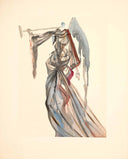
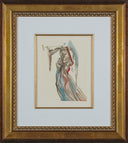
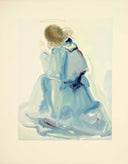
Heaven Canto 10 (The Divine Comedy), 1959-1964
Regular price
$3,475.00
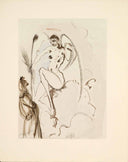
Heaven Canto 2 (The Divine Comedy), 1959-1964
Regular price
$3,475.00
Heaven Canto 28 (The Divine Comedy), 1959-1964
Regular price
$3,475.00


Hell Canto 23 (The Divine Comedy), 1959-1964
Regular price
$3,475.00
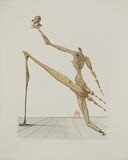
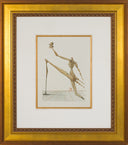
Hell Canto 29 (The Divine Comedy), 1959-1964
Regular price
$3,475.00
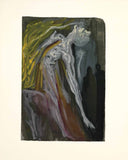
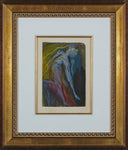
Hell Canto 9 (The Divine Comedy), 1959-1964
Regular price
$3,475.00
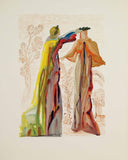
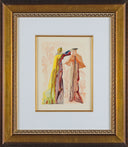
Purgatory Canto 27 (The Divine Comedy), 1959-1964
Regular price
$3,475.00
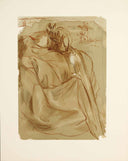
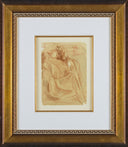
Purgatory Canto 30 (The Divine Comedy), 1959-1964
Regular price
$3,475.00
Start your collection with guidance you can trust
For nearly 50 years, we’ve helped new collectors find artwork they love and understand the stories behind each piece. Our gallery consultants offer personalized guidance, whether you’re exploring originals, limited editions, or discovering an artist for the first time. Visit your nearest gallery to start collecting with confidence.

Frequently Asked Questions
Your artwork comes with a Certificate of Authenticity (or Letter of Authenticity), professional packaging, and insured delivery.
We ship fully insured, using trusted carriers. Each piece is professionally packed to ensure safe arrival. Shipping times vary based on the location of the art, its destination, and whether or not it is framed (ready to ship) at the time of your purchase.
All our works come beautifully framed. Some print multiples may have framing options if we have unframed editions available in our warehouse. Our in-house framing provides high-quality moulding, acid-free materials and either UV plexiglass or framer’s grade acrylic. High value works may be framed in custom, closed-corner frames, and are often framed in Optium museum glass for enhanced clarity.
No, Martin Lawrence Galleries does not provide appraisal services. To ensure that appraisals are fully independent and unbiased, it is best practice for them to be carried out by certified appraisers who have not had prior involvement with the sale or handling of the artwork. For that reason, we do not appraise artworks that we handle, and instead recommend that collectors seek an independent, certified appraiser.
No, we own the vast majority of our inventory and do not seek out consignments from Sellers.
Yes, if you purchase from a local gallery, your consultant will be happy to assist you with hanging the artwork in your home.
Martin Lawrence Galleries has seven galleries across the country where you may be able to see the exact piece you are interested in. Print and sculpture multiples are more likely to be in several places for possible viewings whereas unique artworks will be constrained to one location. We are happy to facilitate your visit to one of our galleries if that is convenient for you. We can also take videos and extensive photos if a visit is not possible. Please contact us at martinlawrencegalleries.com.
We have over 50 years of experience, seven gallery locations across the United States, and a track record of connecting collectors with the right artwork.
No. Our consultants are here to guide you through the process, answer your questions, and make buying art simple and rewarding.
We encourage you to buy what you love. Our consultants will help you find the right piece that fits your taste and collection.
Please visit our page on specific instructions on how to take care of your artworks. Care Instructions
We stand by our artwork. Please review our detailed return policy here.
OUR GALLERIES

Costa Mesa, California
3333 Bear Street
949-759-0134
Mon–Sat: 11:00am – 8:00pm
Sun: 11:00pm – 6:30pm

Las Vegas, Nevada
3500 Las Vegas Boulevard South
702-991–5990
Sun – Thurs: 10:00am – 11:00pm
Fri – Sat: 10:00am – 12:00am
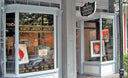
New Orleans, Louisiana
433 Royal Street
504-299-9055
Mon-Sun: 10am - 6pm
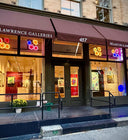
New York, New York
457 West Broadway
212-995-8865
Mon – Sat: 10:00am – 7:00pm
Sun: 11:00am – 7:00pm
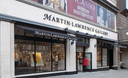
San Francisco, California
366 Geary Street
415-956-0345
Mon-Sun: 10am - 6pm
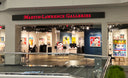
Schaumburg, Illinois
5 Woodfield Mall, Second Level Nordstrom Wing
630-954–3033
Mon – Sat: 10:00am – 9:00pm
Sun: 11:00am – 6:00pm