Fall 2026 Fine Art Catalog Is Here




Le Pitre Rose (The Pink Clown) (D.653), 1974
Price on Request
Details
Medium: hand-signed etching and aquatint on wove paper
Year: 1974
Edition: 50
Sheet size: 54.25 x 38"
Image size: 45.5 x 29.12"
Framed size: 66.5 x 49"
Signature: signed 'Miró' lower right and annotated lower left
Year: 1974
Edition: 50
Sheet size: 54.25 x 38"
Image size: 45.5 x 29.12"
Framed size: 66.5 x 49"
Signature: signed 'Miró' lower right and annotated lower left
About the Work
"Le Pitre Rose (The Pink Clown) (D.653), 1974" is an etching and aquatint on wove paper created by Joan Miró in 1974. From the edition of 50, the artwork is signed 'Miró' lower right and annotated lower left. The artwork is framed in a Spanish-style closed-corner black and gold frame and has a framed size of 66.5 x 49". The artwork ships framed and accompanied by a certificate of authenticity.
Created in 1974, Joan Miró’s "Le Pitre Rose (The Pink Clown)" is a large, visually commanding example of the artist’s late printmaking. Executed as an etching and aquatint on paper, the work reflects Miró’s continued experimentation in the graphic medium during the 1970s, a period in which his imagery became increasingly bold, gestural, and immediate. With its generous scale, vivid color, and unmistakable visual presence, "Le Pitre Rose" captures the expressive freedom that defines Miró’s mature work.
The subject of the clown fits naturally within Miró’s world of performers, dream figures, signs, and invented beings. Rather than presenting a literal theatrical character, Miró reduces the figure to a constellation of marks: sweeping black contours, floating facial features, star-like forms, and passages of saturated color. The image is playful, but not lightweight. It has the ambiguity and psychological charge that give Miró’s mature work its staying power.
The composition is especially effective because of its contrast between structure and spontaneity. Heavy black forms anchor the image, while pink, yellow, green, blue, and red passages create movement and atmosphere. The central figure seems to emerge and dissolve at the same time, producing the kind of open-ended image that allows repeated viewing. Miró’s line has the confidence of calligraphy, but the sheet never feels casual; the balance between gesture, color, and space is carefully resolved.
The work also demonstrates Miró’s ability to bridge figure and abstraction. A face, body, costume, and stage-like atmosphere can be sensed within the composition, yet none are fixed in a literal way. This tension is central to the image’s appeal. The viewer is invited to discover the figure through movement, rhythm, and association, rather than through conventional description.
As a print, "Le Pitre Rose" carries a painterly richness that suits its subject. The etching and aquatint technique supports both the boldness of the black forms and the atmospheric quality of the color. The result is a work that feels animated, tactile, and immediate, with the presence of a unique composition while retaining the refinement of Miró’s graphic practice.
"Le Pitre Rose" remains a compelling example of Miró’s late graphic achievement: playful but substantial, decorative but not superficial, and bold enough to stand apart as a memorable work within his print production. Its appeal lies in the combination of recognizable Miró imagery, strong scale, disciplined composition, and the expressive freedom of an artist who continued to push his visual language late in life.
About the Artist
Le Pitre Rose (The Pink Clown) (D.653), 1974
Regular price
$128,500.00
SELECTED WORK
MORE FROM THIS ARTIST
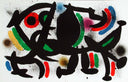

Untitled (Lithographe I, M.864), 1972
Regular price
$2,875.00

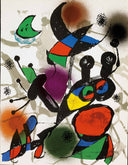
Untitled (Lithographe I, M.867), 1972
Regular price
$3,950.00
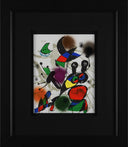
Untitled (Lithographe III, M.1114), 1977
Regular price
$3,950.00


La première nuit du printemps (Allegro Vivace, M.1244), 1981
Price on Request


Homenatge à Joan Prats (Plate 1) (M.705), 1971
Price on Request


Eustache (M.1024), 1975
Price on Request


Els Gossos VI (The Dogs VI) (D.1102), 1979
Price on Request
Le Pitre Rose (The Pink Clown) (D.653), 1974
Price on Request
Start your collection with guidance you can trust
For nearly 50 years, we’ve helped new collectors find artwork they love and understand the stories behind each piece. Our gallery consultants offer personalized guidance, whether you’re exploring originals, limited editions, or discovering an artist for the first time. Visit your nearest gallery to start collecting with confidence.

Frequently Asked Questions
Your artwork comes with a Certificate of Authenticity (or Letter of Authenticity), professional packaging, and insured delivery.
We ship fully insured, using trusted carriers. Each piece is professionally packed to ensure safe arrival. Shipping times vary based on the location of the art, its destination, and whether or not it is framed (ready to ship) at the time of your purchase.
All our works come beautifully framed. Some print multiples may have framing options if we have unframed editions available in our warehouse. Our in-house framing provides high-quality moulding, acid-free materials and either UV plexiglass or framer’s grade acrylic. High value works may be framed in custom, closed-corner frames, and are often framed in Optium museum glass for enhanced clarity.
No, Martin Lawrence Galleries does not provide appraisal services. To ensure that appraisals are fully independent and unbiased, it is best practice for them to be carried out by certified appraisers who have not had prior involvement with the sale or handling of the artwork. For that reason, we do not appraise artworks that we handle, and instead recommend that collectors seek an independent, certified appraiser.
No, we own the vast majority of our inventory and do not seek out consignments from Sellers.
Yes, if you purchase from a local gallery, your consultant will be happy to assist you with hanging the artwork in your home.
Martin Lawrence Galleries has seven galleries across the country where you may be able to see the exact piece you are interested in. Print and sculpture multiples are more likely to be in several places for possible viewings whereas unique artworks will be constrained to one location. We are happy to facilitate your visit to one of our galleries if that is convenient for you. We can also take videos and extensive photos if a visit is not possible. Please contact us at martinlawrencegalleries.com.
We have over 50 years of experience, seven gallery locations across the United States, and a track record of connecting collectors with the right artwork.
No. Our consultants are here to guide you through the process, answer your questions, and make buying art simple and rewarding.
We encourage you to buy what you love. Our consultants will help you find the right piece that fits your taste and collection.
Please visit our page on specific instructions on how to take care of your artworks. Care Instructions
We stand by our artwork. Please review our detailed return policy here.
OUR GALLERIES
Costa Mesa, California
3333 Bear Street
949-759-0134
Mon–Sat: 11:00am – 8:00pm
Sun: 11:00pm – 6:30pm
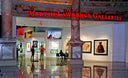
Las Vegas, Nevada
3500 Las Vegas Boulevard South
702-991–5990
Sun – Thurs: 10:00am – 11:00pm
Fri – Sat: 10:00am – 12:00am
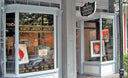
New Orleans, Louisiana
433 Royal Street
504-299-9055
Mon-Sun: 10am - 6pm
New York, New York
457 West Broadway
212-995-8865
Mon – Sat: 10:00am – 7:00pm
Sun: 11:00am – 7:00pm
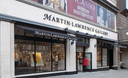
San Francisco, California
366 Geary Street
415-956-0345
Mon-Sun: 10am - 6pm
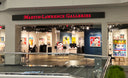
Schaumburg, Illinois
5 Woodfield Mall, Second Level Nordstrom Wing
630-954–3033
Mon – Sat: 10:00am – 9:00pm
Sun: 11:00am – 6:00pm