Fall 2026 Fine Art Catalog Is Here




045 - The Countess of Monte Cristo (Plate 1), 1966
Price on Request
Details
Medium: hand-signed etching
Year: 1966
Edition: 92
Sheet size: 15.25 x 11"
Image size: 8.75 x 6.25"
Framed size: 17.5 x 15.5"
Signature: signed 'Magritte' lower right and annotated lower left
Year: 1966
Edition: 92
Sheet size: 15.25 x 11"
Image size: 8.75 x 6.25"
Framed size: 17.5 x 15.5"
Signature: signed 'Magritte' lower right and annotated lower left
About the Work
"The Countess of Monte Cristo (Plate 1)" is an etching created by René Magritte in 1966 for his series "Aube A l’antipode". From the edition of 92, the artwork is signed 'Magritte' lower right and annotated lower left. The artwork is framed in a custom silver closed-corner frame and has a framed size of 17.5 x 15.5". The artwork ships framed and accompanied by a certificate of authenticity.
The artist book known as "Dawn at the Antipode (Aube a l’antipode)" was a collaboration between the revered French poet Alain Jouffroy and the great 20th Century surrealist, Rene Magritte. Jouffroy was a French writer, poet, and artist. He was an early advocate of an Art Strike and formed the "L’Union des Escrivains" during the strikes of May 1968 in France with Jean-Pierre Faye. He was also a major influence on the Zanzibar Group—part of the French New Wave who took part in the Paris demonstrations at that time.
The seven etchings chosen for the book by Magritte recall Magritte’s most iconic imagery. Each was created as an etching from an original pen and ink drawing by the artist. The book as an object came to fruition through the famed surrealist publisher of art-object books, François Di Dio of the "Le Soleil Noir" publishing house. Di Dio typically produced a book as an object in a small edition of less than one hundred as the ‘A’ edition, with second ‘B’ and third ‘C’ editions of less artistry (the C edition was typically a widely printed ‘pocket’ book). The first edition of Dawn at the Antipode numbers to about ninety-two with some artist proofs also known. These were created in the object tradition with a clamshell hidden compartment concealing a metal ‘Magritte’ bell or rattle. The outer cover of the book has cutouts including a bird, a wine glass, a leaf, and a pipe. Magritte signed and numbered the inner compartment holding the bell in each book.
The prints offered here are from the rare edition of the book, number 11, which included a full set of the seven etchings on large-format paper, all hand-signed and numbered by Magritte. Only the first 17 of 77 copies of the book have all seven hand-signed etchings on large-format paper. The remainder came with just two of the signed etchings per book. There were also artist proofs of the book including fifteen lettered A to O.
In "The Countess of Monte Cristo," Magritte presents a seemingly modest scene, a grouping of five wine bottles arranged on a wooden plank surface. Four stand upright in quiet formation, but one lies knocked over, as if toppled in haste or aftermath. Yet it is within one of the upright bottles that the surrealist rupture occurs: a woman’s figure appears compressed inside - her face peering through the neck, her shoulders tapering through the glass opening, while the rest of her torso and thighs conform unsettlingly to the bottle’s main body.
This image is at once absurd and psychologically loaded, inviting metaphors of containment, objectification, and theatrical illusion. The title, a twist on "The Count of Monte Cristo," recast in the feminine, suggests a narrative of transformation, exile, or disguise, but here inverted into stillness and enclosure. The woman is not escaping; she is sealed in, rendered a cabinet curiosity or a message in a bottle.
Magritte’s interest in the intersection of the human body and the inanimate reaches a chilling refinement here. The bottle, an object associated with pleasure, intoxication, or ritual, becomes a vessel of identity distortion, turning the female figure into both spectacle and symbol. She is visible, but unreachable; eroticized, yet immobilized. It is not just the figure but the idea of femininity itself that is “bottled”—placed on display within the ritualistic trappings of bourgeois domesticity.
Meanwhile, the overturned bottle introduces a quiet tension — a trace of action or imbalance, a rupture in the otherwise frozen composition. Does it signal collapse, resistance, or escape? The ambiguity is quintessential Magritte: the narrative remains locked, but the unease seeps out. Far from merely whimsical, this etching proposes a powerful allegory—of how identity, especially female identity, is shaped, distorted, or obscured by the vessels that claim to contain it.
045 - The Countess of Monte Cristo (Plate 1), 1966
Regular price
$58,850.00
Start your collection with guidance you can trust
For nearly 50 years, we’ve helped new collectors find artwork they love and understand the stories behind each piece. Our gallery consultants offer personalized guidance, whether you’re exploring originals, limited editions, or discovering an artist for the first time. Visit your nearest gallery to start collecting with confidence.

Frequently Asked Questions
Your artwork comes with a Certificate of Authenticity (or Letter of Authenticity), professional packaging, and insured delivery.
We ship fully insured, using trusted carriers. Each piece is professionally packed to ensure safe arrival. Shipping times vary based on the location of the art, its destination, and whether or not it is framed (ready to ship) at the time of your purchase.
All our works come beautifully framed. Some print multiples may have framing options if we have unframed editions available in our warehouse. Our in-house framing provides high-quality moulding, acid-free materials and either UV plexiglass or framer’s grade acrylic. High value works may be framed in custom, closed-corner frames, and are often framed in Optium museum glass for enhanced clarity.
No, Martin Lawrence Galleries does not provide appraisal services. To ensure that appraisals are fully independent and unbiased, it is best practice for them to be carried out by certified appraisers who have not had prior involvement with the sale or handling of the artwork. For that reason, we do not appraise artworks that we handle, and instead recommend that collectors seek an independent, certified appraiser.
No, we own the vast majority of our inventory and do not seek out consignments from Sellers.
Yes, if you purchase from a local gallery, your consultant will be happy to assist you with hanging the artwork in your home.
Martin Lawrence Galleries has seven galleries across the country where you may be able to see the exact piece you are interested in. Print and sculpture multiples are more likely to be in several places for possible viewings whereas unique artworks will be constrained to one location. We are happy to facilitate your visit to one of our galleries if that is convenient for you. We can also take videos and extensive photos if a visit is not possible. Please contact us at martinlawrencegalleries.com.
We have over 50 years of experience, seven gallery locations across the United States, and a track record of connecting collectors with the right artwork.
No. Our consultants are here to guide you through the process, answer your questions, and make buying art simple and rewarding.
We encourage you to buy what you love. Our consultants will help you find the right piece that fits your taste and collection.
Please visit our page on specific instructions on how to take care of your artworks. Care Instructions
We stand by our artwork. Please review our detailed return policy here.
OUR GALLERIES

Costa Mesa, California
3333 Bear Street
949-759-0134
Mon–Sat: 11:00am – 8:00pm
Sun: 11:00pm – 6:30pm

Las Vegas, Nevada
3500 Las Vegas Boulevard South
702-991–5990
Sun – Thurs: 10:00am – 11:00pm
Fri – Sat: 10:00am – 12:00am
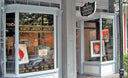
New Orleans, Louisiana
433 Royal Street
504-299-9055
Mon-Sun: 10am - 6pm
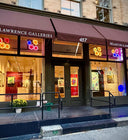
New York, New York
457 West Broadway
212-995-8865
Mon – Sat: 10:00am – 7:00pm
Sun: 11:00am – 7:00pm
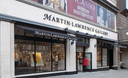
San Francisco, California
366 Geary Street
415-956-0345
Mon-Sun: 10am - 6pm
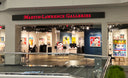
Schaumburg, Illinois
5 Woodfield Mall, Second Level Nordstrom Wing
630-954–3033
Mon – Sat: 10:00am – 9:00pm
Sun: 11:00am – 6:00pm