Fall 2026 Fine Art Catalog Is Here




Three Women, 1911
Price on Request
Details
Medium: gouache on paper
Year: 1911
Sheet size: 18.75 x 13.5"
Image size: 18 x 13"
Framed size: 25.75 x 20.25"
Year: 1911
Sheet size: 18.75 x 13.5"
Image size: 18 x 13"
Framed size: 25.75 x 20.25"
About the Work
"Three Women" is a gouache on paper created by Erté in 1911. Erté's "Composition originale" stamp is present verso. The artwork ships framed in a custom closed-corner gold-tone frame and has a framed size of 25.75 x 20.25".
Executed in 1911, "Three Women" is a fascinating and highly significant early work by Erté (Romain de Tirtoff), created at a moment when the artist was beginning to formulate the visual language that would later make him one of the most influential figures of the Art Deco era. Long before his celebrated illustrations for "Harper’s Bazaar," his theatrical costume designs, and his internationally recognized decorative works, Erté was already exploring the themes that would define his career: elegance, fashion, theatricality, and the transformative power of style. As such, "Three Wome"n offers a rare glimpse into the origins of an artistic vision that would shape the look of modern glamour throughout the twentieth century.
The composition depicts three fashionably dressed women arranged in a carefully balanced grouping. Their elongated forms, elegant posture, and refined attire immediately recall the world of haute couture and high society that would become a recurring source of inspiration throughout Erté’s career. Even at this early stage, he demonstrates a remarkable sensitivity to silhouette and proportion. The figures are not simply portraits or fashion studies; they are embodiments of sophistication itself, transformed into idealized visions of modern femininity.
What makes the work particularly striking is its restrained and highly sophisticated use of color. Much of the composition is rendered in black and white, emphasizing line, form, and decorative rhythm. Against this monochromatic framework, Erté introduces delicate passages of pale blue, which appear across one woman's skirt and within the background. The effect is subtle yet powerful. The selective use of color guides the viewer’s eye through the composition while creating a dreamlike atmosphere that feels both decorative and modern. This interplay between monochrome elegance and carefully placed color accents would remain a hallmark of Erté’s mature work.
The figures themselves appear poised between reality and fantasy. Their fashionable attire reflects contemporary styles of the period, yet their exaggerated grace elevates them beyond everyday life. Erté was never interested in mere documentation. Instead, he sought to create an idealized world where beauty, style, and theatricality merged into a seamless whole. In "Three Women," one can already see the foundations of this philosophy taking shape. The women are presented less as individuals than as symbols of elegance, their garments and gestures becoming part of a larger decorative composition.
The influence of Art Nouveau is also evident throughout the work. The flowing contours, rhythmic arrangement of forms, and emphasis on decorative harmony reflect a movement that still held considerable influence in Europe during the early 1910s. Yet there is also a growing sense of simplification and stylization that points toward the emerging Art Deco aesthetic. The figures possess a streamlined elegance that anticipates the sleek sophistication for which Erté would later become famous. Viewed from this perspective, "Three Women" occupies an important position between two major artistic eras, capturing a moment of transition in both fashion and design history.
More than a century after its creation, "Three Women" remains a compelling expression of youthful brilliance and artistic vision. It captures a pivotal moment in Erté’s development, when the foundations of a career dedicated to beauty and design were first being established. Elegant, poised, and richly evocative, the work offers a rare opportunity to witness the emergence of one of the defining artistic voices of the twentieth century.
About the Artist
Three Women, 1911
Regular price
$26,850.00
SELECTED WORK
MORE FROM THIS ARTIST


Bird in a Gilded Cage, 1989
Regular price
$2,975.00


Casbah, 1989
Regular price
$2,475.00


A Dream, 1987
Regular price
$3,975.00


Air, 1984
Regular price
$2,475.00


Balinese, 1990
Regular price
$2,475.00


California (Turquoise Dress), 1989
Regular price
$3,975.00


Cameos, 1990
Regular price
$1,475.00


Cocktail Party, 1988
Regular price
$1,975.00
Start your collection with guidance you can trust
For nearly 50 years, we’ve helped new collectors find artwork they love and understand the stories behind each piece. Our gallery consultants offer personalized guidance, whether you’re exploring originals, limited editions, or discovering an artist for the first time. Visit your nearest gallery to start collecting with confidence.

Frequently Asked Questions
Your artwork comes with a Certificate of Authenticity (or Letter of Authenticity), professional packaging, and insured delivery.
We ship fully insured, using trusted carriers. Each piece is professionally packed to ensure safe arrival. Shipping times vary based on the location of the art, its destination, and whether or not it is framed (ready to ship) at the time of your purchase.
All our works come beautifully framed. Some print multiples may have framing options if we have unframed editions available in our warehouse. Our in-house framing provides high-quality moulding, acid-free materials and either UV plexiglass or framer’s grade acrylic. High value works may be framed in custom, closed-corner frames, and are often framed in Optium museum glass for enhanced clarity.
No, Martin Lawrence Galleries does not provide appraisal services. To ensure that appraisals are fully independent and unbiased, it is best practice for them to be carried out by certified appraisers who have not had prior involvement with the sale or handling of the artwork. For that reason, we do not appraise artworks that we handle, and instead recommend that collectors seek an independent, certified appraiser.
No, we own the vast majority of our inventory and do not seek out consignments from Sellers.
Yes, if you purchase from a local gallery, your consultant will be happy to assist you with hanging the artwork in your home.
Martin Lawrence Galleries has seven galleries across the country where you may be able to see the exact piece you are interested in. Print and sculpture multiples are more likely to be in several places for possible viewings whereas unique artworks will be constrained to one location. We are happy to facilitate your visit to one of our galleries if that is convenient for you. We can also take videos and extensive photos if a visit is not possible. Please contact us at martinlawrencegalleries.com.
We have over 50 years of experience, seven gallery locations across the United States, and a track record of connecting collectors with the right artwork.
No. Our consultants are here to guide you through the process, answer your questions, and make buying art simple and rewarding.
We encourage you to buy what you love. Our consultants will help you find the right piece that fits your taste and collection.
Please visit our page on specific instructions on how to take care of your artworks. Care Instructions
We stand by our artwork. Please review our detailed return policy here.
OUR GALLERIES

Costa Mesa, California
3333 Bear Street
949-759-0134
Mon–Sat: 11:00am – 8:00pm
Sun: 11:00pm – 6:30pm

Las Vegas, Nevada
3500 Las Vegas Boulevard South
702-991–5990
Sun – Thurs: 10:00am – 11:00pm
Fri – Sat: 10:00am – 12:00am
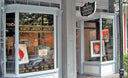
New Orleans, Louisiana
433 Royal Street
504-299-9055
Mon-Sun: 10am - 6pm
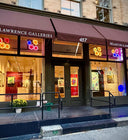
New York, New York
457 West Broadway
212-995-8865
Mon – Sat: 10:00am – 7:00pm
Sun: 11:00am – 7:00pm
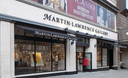
San Francisco, California
366 Geary Street
415-956-0345
Mon-Sun: 10am - 6pm
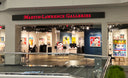
Schaumburg, Illinois
5 Woodfield Mall, Second Level Nordstrom Wing
630-954–3033
Mon – Sat: 10:00am – 9:00pm
Sun: 11:00am – 6:00pm