Collector's Credits Summer Sale Going On Now




Coral Six (SF71-041), 1971
Price on Request
Details
Medium: acrylic on paper
Year: 1971
Image size: 27.5 x 41.25"
Framed size: 40.25 x 52.25"
Signature: signed, dedicated and dated '1971' on verso
Year: 1971
Image size: 27.5 x 41.25"
Framed size: 40.25 x 52.25"
Signature: signed, dedicated and dated '1971' on verso
About the Work
"Coral Six (SF71-041)" is an acrylic on paper painting created by Sam Francis in 1971. The artwork is signed, dedicated and dated '1971' on verso. The artwork ships framed in a contemporary white frame and has a framed size of 40.25 x 52.25".
‘People looking into the open centers of his ‘Edge’ paintings of the late 1960s would ask: ‘Sam, why is it so empty?’ and he‘d say, ‘The space at the center of these paintings is reserved for you.’
Sam Francis’s life was shaped by rupture and renewal. As a young man he intended to become a doctor, but a severe back injury during military service left him confined to a hospital bed for years. Immobilized and staring at a vast white ceiling, he became acutely aware of light, shadow, and open space. In that stillness, painting emerged as both refuge and revelation. Encouraged by his friend David Park, Francis redirected his life toward art, earning degrees by 1950 before moving to Paris, where he quickly gained international acclaim.
Influenced by artists such as Matisse, Francis developed a refined sensitivity to color and spatial orchestration. While his works of the 1960s often carried gestural intensity, the early 1970s marked a shift toward clarity and restraint in what became known as his “Edge” or “Sail” paintings. “Coral Six (SF71-041)” stands as a compelling example of this evolution.
In this work, the white canvas is not passive background but an active, resonant field. Francis allows space to breathe, treating it as a meditative presence. Bands of saturated orange, deep violet and teal gather along the edges of the composition, forming vivid strips that appear to orbit the central void. These chromatic passages press against the white interior, heightening its luminosity and creating a rhythmic perimeter.
Color functions as a pathway, guiding the eye along the margins before releasing it back into the quiet openness at the center. The result is a balance between saturation and stillness, presence and absence. The composition suggests movement without narrative, inviting contemplation rather than spectacle.
The psychological dimension of this approach reflects Francis’s engagement with Jungian thought during this period. The white field becomes a space of potential rather than emptiness, while the vibrant borders frame rather than dominate it. Meaning arises through openness and attentive looking.
In “Coral Six (SF71-041),” Francis demonstrates that space itself can carry expressive weight equal to color. The painting becomes a meditation on equilibrium and interior dialogue, revealing his mature mastery of restraint, luminosity, and spatial harmony.
About the Artist
Coral Six (SF71-041), 1971
Regular price
$195,000.00
SELECTED WORK
MORE FROM THIS ARTIST
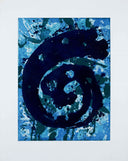
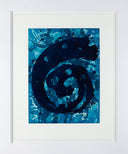
Untitled (SFE-015, I.48), 1984
Regular price
$14,850.00


Untitled (SF78-045), 1978
Price on Request
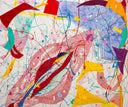
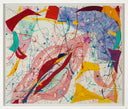
Untitled (SFM 86-239), 1986
Price on Request
Untitled (SF-271, L.265), 1986
Regular price
$19,850.00
Untitled (SF-310, L.236), 1979
Price on Request
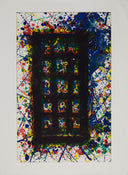
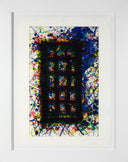
Concert Hall Set II (SF-231, L.224), 1977
Regular price
$16,850.00
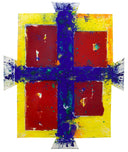
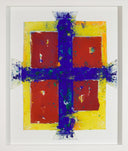
Untitled (SFM 80-016), 1980
Price on Request
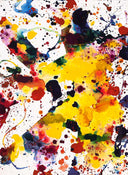
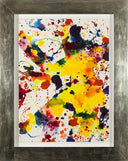
Untitled (SF73-157), 1973
Price on Request
Start your collection with guidance you can trust
For nearly 50 years, we’ve helped new collectors find artwork they love and understand the stories behind each piece. Our gallery consultants offer personalized guidance, whether you’re exploring originals, limited editions, or discovering an artist for the first time. Visit your nearest gallery to start collecting with confidence.

Frequently Asked Questions
Your artwork comes with a Certificate of Authenticity (or Letter of Authenticity), professional packaging, and insured delivery.
We ship fully insured, using trusted carriers. Each piece is professionally packed to ensure safe arrival. Shipping times vary based on the location of the art, its destination, and whether or not it is framed (ready to ship) at the time of your purchase.
All our works come beautifully framed. Some print multiples may have framing options if we have unframed editions available in our warehouse. Our in-house framing provides high-quality moulding, acid-free materials and either UV plexiglass or framer’s grade acrylic. High value works may be framed in custom, closed-corner frames, and are often framed in Optium museum glass for enhanced clarity.
No, Martin Lawrence Galleries does not provide appraisal services. To ensure that appraisals are fully independent and unbiased, it is best practice for them to be carried out by certified appraisers who have not had prior involvement with the sale or handling of the artwork. For that reason, we do not appraise artworks that we handle, and instead recommend that collectors seek an independent, certified appraiser.
No, we own the vast majority of our inventory and do not seek out consignments from Sellers.
Yes, if you purchase from a local gallery, your consultant will be happy to assist you with hanging the artwork in your home.
Martin Lawrence Galleries has seven galleries across the country where you may be able to see the exact piece you are interested in. Print and sculpture multiples are more likely to be in several places for possible viewings whereas unique artworks will be constrained to one location. We are happy to facilitate your visit to one of our galleries if that is convenient for you. We can also take videos and extensive photos if a visit is not possible. Please contact us at martinlawrencegalleries.com.
We have over 50 years of experience, seven gallery locations across the United States, and a track record of connecting collectors with the right artwork.
No. Our consultants are here to guide you through the process, answer your questions, and make buying art simple and rewarding.
We encourage you to buy what you love. Our consultants will help you find the right piece that fits your taste and collection.
Please visit our page on specific instructions on how to take care of your artworks. Care Instructions
We stand by our artwork. Please review our detailed return policy here.
OUR GALLERIES
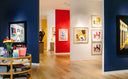
Costa Mesa, California
3333 Bear Street
949-759-0134
Mon–Sat: 11:00am – 8:00pm
Sun: 11:00pm – 6:30pm
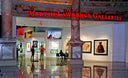
Las Vegas, Nevada
3500 Las Vegas Boulevard South
702-991–5990
Sun – Thurs: 10:00am – 11:00pm
Fri – Sat: 10:00am – 12:00am
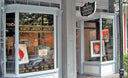
New Orleans, Louisiana
433 Royal Street
504-299-9055
Mon-Sun: 10am - 6pm
New York, New York
457 West Broadway
212-995-8865
Mon – Sat: 10:00am – 7:00pm
Sun: 11:00am – 7:00pm
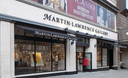
San Francisco, California
366 Geary Street
415-956-0345
Mon-Sun: 10am - 6pm
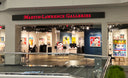
Schaumburg, Illinois
5 Woodfield Mall, Second Level Nordstrom Wing
630-954–3033
Mon – Sat: 10:00am – 9:00pm
Sun: 11:00am – 6:00pm