Fall 2026 Fine Art Catalog Is Here




I Love Liberty (C.192), 1982
Price on Request
Details
Medium: hand-signed screenprint on Arches 88 paper
Year: 1982
Edition: 323
Sheet size: 38.37 x 27.12"
Image size: 32.37 x 21.12"
Framed size: 49 x 37.75"
Signature: signed and dated 'rf Lichtenstein '82' and annotated lower right
Year: 1982
Edition: 323
Sheet size: 38.37 x 27.12"
Image size: 32.37 x 21.12"
Framed size: 49 x 37.75"
Signature: signed and dated 'rf Lichtenstein '82' and annotated lower right
About the Work
"I Love Liberty (C.192)" is a screenprint on Arches 88 paper created by Roy Lichtenstein in 1982. From the edition of 323, the artwork is signed and dated 'rf Lichtenstein '82' and annotated lower right. The artwork is framed in a custom closed-corner gold leaf frame and has a framed size of 49 x 37.75". The artwork ships framed and accompanied by a certificate of authenticity.
Roy Lichtenstein’s "I Love Liberty, 1982" is a striking screenprint that brings together the artist’s graphic precision, fascination with mass culture, and ambivalent approach to American symbolism. Commissioned in connection with the early 1980s national campaign of the same name, the print reflects a moment when civic identity, patriotism, and democratic values were being actively promoted and publicly reimagined. Rather than presenting the Statue of Liberty as a distant monument or heroic emblem, Lichtenstein transforms her into a bold, fragmented image shaped by the visual language of Pop Art.
The composition offers a tightly cropped and deconstructed view of Liberty. Her crown and face appear largely in black and white, giving her features an architectural, almost mechanical quality. The torch flame is rendered in flat yellow, sharply contained by black outlines and accented with a small red tip, suggesting heat, light, and symbolic illumination. The tablet and hand are also highlighted in yellow, drawing attention to Liberty’s role as a bearer of law and democratic ideals. Behind these forms, diagonal blue stripes create a rhythmic, graphic backdrop that flattens the image and pushes it toward abstraction.
This use of cropping, scale, and simplification is central to the print’s meaning. Lichtenstein makes the Statue of Liberty instantly recognizable, but also strangely impersonal. She becomes less a singular monument than a reproduced image—something familiar from newspapers, stamps, posters, souvenirs, and patriotic campaigns. In this sense, "I Love Liberty" asks viewers to consider how national symbols circulate in popular culture, and how repetition can transform even the most revered emblem into something resembling a logo.
Lichtenstein had long been interested in American imagery, from comic-book soldiers to flags and commercial graphics. In "I Love Liberty," he applies that same Pop sensibility to one of the country’s most charged symbols. The result is neither simple celebration nor outright critique. Instead, the print occupies a more complex space: it honors Liberty’s visual power while also exposing how that power is constructed, stylized, and mediated through graphic design.
Created during the Cold War and the Reagan era, "I Love Liberty" also reflects the renewed visibility of patriotic imagery in early 1980s America. Yet Lichtenstein’s treatment remains cool and controlled rather than sentimental. By reducing Liberty to bold outlines, flat color, and fragmented forms, he shows how national identity is shaped through images that are endlessly reproduced and consumed.
Ultimately, "I Love Liberty" is more than a decorative patriotic print. It is a sophisticated meditation on how American ideals become icons, and how icons become part of mass visual culture. Through his Pop Art vocabulary, Lichtenstein reframes the Statue of Liberty as both sacred symbol and graphic sign. The work’s power lies in that tension: it invites admiration for Liberty while also asking what it means to love an image of liberty in a culture where images are constantly reproduced, packaged, and redefined.
About the Artist
I Love Liberty (C.192), 1982
Regular price
$198,500.00
SELECTED WORK
MORE FROM THIS ARTIST


A Bright Night (C.155, Surrealist Series), 1978
Price on Request
I Love Liberty (C.192), 1982
Price on Request


104 - Composition IV (C.293, Musical Notes), 1995
Price on Request
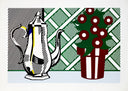
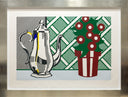
Still Life with Pitcher and Flowers (C.130, Six Still Lifes), 1974
Price on Request
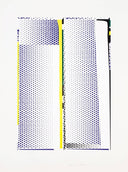
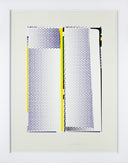
Mirror #9 (C.114, Mirror Series), 1972
Price on Request
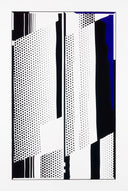
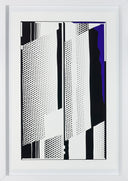
Twin Mirrors (C.102), 1970
Price on Request


Start your collection with guidance you can trust
For nearly 50 years, we’ve helped new collectors find artwork they love and understand the stories behind each piece. Our gallery consultants offer personalized guidance, whether you’re exploring originals, limited editions, or discovering an artist for the first time. Visit your nearest gallery to start collecting with confidence.

Frequently Asked Questions
Your artwork comes with a Certificate of Authenticity (or Letter of Authenticity), professional packaging, and insured delivery.
We ship fully insured, using trusted carriers. Each piece is professionally packed to ensure safe arrival. Shipping times vary based on the location of the art, its destination, and whether or not it is framed (ready to ship) at the time of your purchase.
All our works come beautifully framed. Some print multiples may have framing options if we have unframed editions available in our warehouse. Our in-house framing provides high-quality moulding, acid-free materials and either UV plexiglass or framer’s grade acrylic. High value works may be framed in custom, closed-corner frames, and are often framed in Optium museum glass for enhanced clarity.
No, Martin Lawrence Galleries does not provide appraisal services. To ensure that appraisals are fully independent and unbiased, it is best practice for them to be carried out by certified appraisers who have not had prior involvement with the sale or handling of the artwork. For that reason, we do not appraise artworks that we handle, and instead recommend that collectors seek an independent, certified appraiser.
No, we own the vast majority of our inventory and do not seek out consignments from Sellers.
Yes, if you purchase from a local gallery, your consultant will be happy to assist you with hanging the artwork in your home.
Martin Lawrence Galleries has seven galleries across the country where you may be able to see the exact piece you are interested in. Print and sculpture multiples are more likely to be in several places for possible viewings whereas unique artworks will be constrained to one location. We are happy to facilitate your visit to one of our galleries if that is convenient for you. We can also take videos and extensive photos if a visit is not possible. Please contact us at martinlawrencegalleries.com.
We have over 50 years of experience, seven gallery locations across the United States, and a track record of connecting collectors with the right artwork.
No. Our consultants are here to guide you through the process, answer your questions, and make buying art simple and rewarding.
We encourage you to buy what you love. Our consultants will help you find the right piece that fits your taste and collection.
Please visit our page on specific instructions on how to take care of your artworks. Care Instructions
We stand by our artwork. Please review our detailed return policy here.
OUR GALLERIES
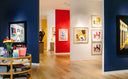
Costa Mesa, California
3333 Bear Street
949-759-0134
Mon–Sat: 11:00am – 8:00pm
Sun: 11:00pm – 6:30pm
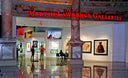
Las Vegas, Nevada
3500 Las Vegas Boulevard South
702-991–5990
Sun – Thurs: 10:00am – 11:00pm
Fri – Sat: 10:00am – 12:00am
New Orleans, Louisiana
433 Royal Street
504-299-9055
Mon-Sun: 10am - 6pm
New York, New York
457 West Broadway
212-995-8865
Mon – Sat: 10:00am – 7:00pm
Sun: 11:00am – 7:00pm
San Francisco, California
366 Geary Street
415-956-0345
Mon-Sun: 10am - 6pm
Schaumburg, Illinois
5 Woodfield Mall, Second Level Nordstrom Wing
630-954–3033
Mon – Sat: 10:00am – 9:00pm
Sun: 11:00am – 6:00pm