Fall 2026 Fine Art Catalog Is Here




Maiko in Springtime Kyoto, 2024
Price on Request
Details
Medium: hand-signed 4c offset lithograph with cold stamp and high gloss varnishing
Year: 2024
Edition: 300
Sheet size: 19.75 x 19.75"
Image size: 19.75 x 19.75"
Signature: signed and annotated lower right
Year: 2024
Edition: 300
Sheet size: 19.75 x 19.75"
Image size: 19.75 x 19.75"
Signature: signed and annotated lower right
About the Work
"Maiko in Springtime Kyoto" is a 4c offset lithograph with cold stamp and high gloss varnishing created by Takashi Murakami in 2024 for his 'Maiko' series. From the edition of 300, the artwork is signed and annotated lower right. The image size is 19.75 x 19.75". The artwork ships framed and accompanied by a certificate of authenticity.
Takashi Murakami’s 'Maiko' images present Kyoto as both instantly recognizable and deeply layered. At first glance, these works are bright, decorative, and welcoming: a young maiko stands before cherry blossoms, stylized hills, temple architecture, a torii gate, and a gold-inflected landscape. Yet, as with much of Murakami’s work, the surface charm carries a more complex cultural and historical charge. These images are not simply pictures of a beautiful woman in traditional dress; they are condensed portraits of Kyoto itself.
A maiko is an apprentice geiko, the Kyoto term for what is more commonly known outside Japan as a geisha. Maiko are associated with highly refined traditional performance: dance, music, seasonal etiquette, conversation, costume, and ceremonial hospitality. Their appearance is intentionally elaborate. Long-sleeved kimono, ornate hair ornaments, white makeup, red accents, and carefully chosen seasonal motifs all communicate age, training, season, and rank. In Kyoto, the maiko is not just a figure of beauty, but a living symbol of cultural continuity.
Murakami’s choice of the maiko is especially meaningful in the context of his Kyoto-focused work. Kyoto is often imagined through temples, gardens, cherry blossoms, old streets, and refined traditions. The maiko brings all of these associations into human form. She is both performer and symbol: a figure trained to preserve tradition, but also an image widely circulated in contemporary visual culture. This dual role makes her ideal for Murakami, whose art often collapses the distance between historical Japanese art, manga, advertising, luxury objects, and popular culture.
In "Maiko in Springtime Kyoto," the central figure is surrounded by signs of seasonal and spiritual Kyoto. The cherry blossoms suggest spring, beauty, renewal, and transience. In Japanese visual culture, sakura often point not only to loveliness, but also to the fleeting nature of life. Murakami’s smiling flowers make this theme playful and accessible, while the wider composition keeps it rooted in traditional symbolism.
Behind the maiko are six animated green forms that resemble mountains, ghosts, or small spirits. These likely refer to Kyoto’s famous Gozan no Okuribi, the mountain bonfires lit each August at the close of Obon, the season when ancestral spirits are believed to return and then depart again. Although called the “Five Mountain Fires,” the signs can appear as six forms because one of them, Myō-Hō, is written as two characters: 妙 and 法. The full group includes 大 meaning “great” or “large,” 妙 meaning “wondrous” or “mystic,” 法 meaning “law” or “Buddhist teaching,” a boat form, another 大, and a torii gate form. In Murakami’s image, these motifs are transformed into cute, watchful hill-spirits. They bring an undertone of memory, ritual, and the passage between worlds.
This matters because Murakami’s Kyoto is not merely picturesque. It is beautiful, but also haunted by history, religion, performance, and folklore. The works connect to the idea of mononoke: not simply “evil spirits,” but uncanny presences, invisible forces, or the spirit-life of a place. The maiko stands at the center of this world as a poised, elegant mediator between past and present.
The related offset lithographs "Maiko of Kyoto, Cherry Blossoms on Red" and "Maiko of Kyoto, Cherry Blossoms on Blue" emphasize color, pattern, and repetition. The red and blue backgrounds change the emotional temperature of the image. Red feels festive, bold, theatrical, and auspicious; blue feels cooler, calmer, and more contemplative. In both, the maiko is framed by cherry blossoms, turning her into an emblem of Kyoto spring. These are not documentary portraits, but symbolic icons. Murakami uses flat color, crisp outlines, decorative pattern, and kawaii-inflected features to make a traditional subject feel contemporary and immediately legible.
These prints are visually joyful and easy to love: bright color, flowers, Kyoto atmosphere, and Murakami’s unmistakable pop language. But they are also intellectually rich. They bring together the maiko tradition, cherry-blossom symbolism, Kyoto’s ritual landscape, Buddhist and Shinto references, and Murakami’s lifelong project of reanimating Japanese art history through contemporary culture.
About the Artist
Maiko in Springtime Kyoto, 2024
Regular price
$7,850.00
SELECTED WORK
MORE FROM THIS ARTIST


Murakami.Flower #1390 Five-storied Pagoda, 2024
Price on Request


358 - Let's Go on the Time Machine, 2021
Price on Request


And Then x 6 (Platinum & White: The Superflat Method), 2012
Price on Request


338 - Hollow (Black), 2018
Price on Request


HOLLOW (Red), 2018
Price on Request


Murakami.Flower #11139 Bamboo, 2024
Price on Request


Sphere (White), 2003
Price on Request


340 - A Fork in the Road, 2020
Price on Request
Start your collection with guidance you can trust
For nearly 50 years, we’ve helped new collectors find artwork they love and understand the stories behind each piece. Our gallery consultants offer personalized guidance, whether you’re exploring originals, limited editions, or discovering an artist for the first time. Visit your nearest gallery to start collecting with confidence.

Frequently Asked Questions
Your artwork comes with a Certificate of Authenticity (or Letter of Authenticity), professional packaging, and insured delivery.
We ship fully insured, using trusted carriers. Each piece is professionally packed to ensure safe arrival. Shipping times vary based on the location of the art, its destination, and whether or not it is framed (ready to ship) at the time of your purchase.
All our works come beautifully framed. Some print multiples may have framing options if we have unframed editions available in our warehouse. Our in-house framing provides high-quality moulding, acid-free materials and either UV plexiglass or framer’s grade acrylic. High value works may be framed in custom, closed-corner frames, and are often framed in Optium museum glass for enhanced clarity.
No, Martin Lawrence Galleries does not provide appraisal services. To ensure that appraisals are fully independent and unbiased, it is best practice for them to be carried out by certified appraisers who have not had prior involvement with the sale or handling of the artwork. For that reason, we do not appraise artworks that we handle, and instead recommend that collectors seek an independent, certified appraiser.
No, we own the vast majority of our inventory and do not seek out consignments from Sellers.
Yes, if you purchase from a local gallery, your consultant will be happy to assist you with hanging the artwork in your home.
Martin Lawrence Galleries has seven galleries across the country where you may be able to see the exact piece you are interested in. Print and sculpture multiples are more likely to be in several places for possible viewings whereas unique artworks will be constrained to one location. We are happy to facilitate your visit to one of our galleries if that is convenient for you. We can also take videos and extensive photos if a visit is not possible. Please contact us at martinlawrencegalleries.com.
We have over 50 years of experience, seven gallery locations across the United States, and a track record of connecting collectors with the right artwork.
No. Our consultants are here to guide you through the process, answer your questions, and make buying art simple and rewarding.
We encourage you to buy what you love. Our consultants will help you find the right piece that fits your taste and collection.
Please visit our page on specific instructions on how to take care of your artworks. Care Instructions
We stand by our artwork. Please review our detailed return policy here.
OUR GALLERIES
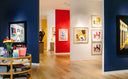
Costa Mesa, California
3333 Bear Street
949-759-0134
Mon–Sat: 11:00am – 8:00pm
Sun: 11:00pm – 6:30pm
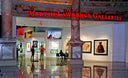
Las Vegas, Nevada
3500 Las Vegas Boulevard South
702-991–5990
Sun – Thurs: 10:00am – 11:00pm
Fri – Sat: 10:00am – 12:00am
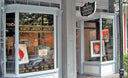
New Orleans, Louisiana
433 Royal Street
504-299-9055
Mon-Sun: 10am - 6pm
New York, New York
457 West Broadway
212-995-8865
Mon – Sat: 10:00am – 7:00pm
Sun: 11:00am – 7:00pm
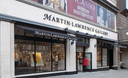
San Francisco, California
366 Geary Street
415-956-0345
Mon-Sun: 10am - 6pm
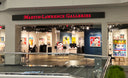
Schaumburg, Illinois
5 Woodfield Mall, Second Level Nordstrom Wing
630-954–3033
Mon – Sat: 10:00am – 9:00pm
Sun: 11:00am – 6:00pm