Fall 2026 Fine Art Catalog Is Here




Vénus et l'Amour, d'après Cranach 2nd Variation, State II (B.613), 1949
Regular price
$58,500.00
Details
Medium: hand-signed lithograph
Year: 1949
Edition: 55
Sheet size: 30 x 22.25"
Image size: 26.37 x 19"
Framed size: 45.5 x 40"
Signature: signed 'Picasso' lower right and annotated lower left
Year: 1949
Edition: 55
Sheet size: 30 x 22.25"
Image size: 26.37 x 19"
Framed size: 45.5 x 40"
Signature: signed 'Picasso' lower right and annotated lower left
About the Work
"Vénus et l'Amour, d'après Cranach 2nd Variation, State II (B.613)" is a lithograph created by Pablo Picasso in 1949. From the edition of 55, the artwork is signed 'Picasso' lower right and annotated lower left. The artwork is framed in a custom Spanish-style\closed-corner black and gold frame and has a framed size of 45.5 x 40". The artwork ships framed and accompanied by a certificate of authenticity.
Pablo Picasso’s "Vénus et l’Amour, d’après Cranach. Deuxième variation, deuxième état, 1949," is a powerful example of the artist’s postwar engagement with Old Master imagery and the expressive possibilities of lithography. Inspired by Lucas Cranach the Elder’s Renaissance subject of Venus and Cupid, Picasso does not simply reproduce the historical source. He reimagines it through his own graphic language, transforming a refined mythological image into something direct, physical, and unmistakably modern.
The composition retains the essential relationship between Venus and Cupid: the standing female nude, frontal and statuesque, accompanied by the small god of love holding his arrow. But Picasso strips away decorative elegance and replaces it with tension, immediacy, and bold contrast. Venus appears monumental and grounded, her body defined by vigorous black-and-white passages rather than polished contour. Cupid, smaller and more animated, looks upward with theatrical intensity, creating a charged exchange between the two figures.
This contrast is central to the image. Throughout his career, Picasso returned often to Cupid, Amor, Eros, and related childlike mythic figures because they allowed him to introduce desire, mischief, vulnerability, and movement into classical compositions. These figures are rarely sentimental in his work. Instead, they act as sparks within the image: pointing, provoking, interrupting, or activating the larger scene around them. Here, Cupid is not merely a borrowed Renaissance detail. He is the force that animates the composition, turning Venus from a static ideal of beauty into part of a more psychologically active encounter.
What gives the print much of its visual impact is Picasso’s handling of lithographic black. The dark background acts almost like a stage curtain, pushing the pale figures forward and heightening the drama of the image. The marks feel painterly, spontaneous, and tactile, reminding us that lithography, in Picasso’s hands, was not a mechanical reproductive medium but a space for experiment and reinvention.
This work belongs to a closely related group of four lithographic treatments after Cranach, catalogued by Rau as numbers 485 through 488. Picasso created four variations on the subject, with the second variation developed in two states. The present work, catalogued as Rau 487, is the second and final state of the second variation. It is also recorded as Bloch 613 and Mourlot 183/II, placing it firmly within the principal catalogues raisonnés of Picasso’s printed work.
For collectors, the appeal lies in the combination of recognizable subject, strong visual presence, and important printmaking context. The image connects Picasso to the European painting tradition while showing how completely he could absorb and remake that tradition on his own terms. It is at once classical and raw, historical and contemporary, elegant in subject yet forceful in execution.
As a signed lithograph from 1949, printed by Mourlot and published by Galerie Louise Leiris, "Vénus et l’Amour" represents one of the most engaging moments in Picasso’s late-1940s graphic production. It rewards both immediate visual response and closer art-historical consideration: a Renaissance Venus transformed by Picasso into a modern meditation on beauty, desire, and artistic reinvention.
About the Artist
Vénus et l'Amour, d'après Cranach 2nd Variation, State II (B.613), 1949
Regular price
$58,500.00
SELECTED WORK
MORE FROM THIS ARTIST


At the Circus: Group with Horse and Clown (347 Series, B.1485), 1968
Regular price
$38,850.00


Two Women with a Man and Child at Leisure (B.1383), 1966
Regular price
$22,850.00


Painter and Model with a Bow in Hair (B.1161), 1967
Regular price
$28,850.00


Picador et Torero attendant le Paseo de Cuadrillas (B.906), 1959
Price on Request


Painter and Model in a Rocking Chair (B.1852), 1965
Regular price
$58,850.00


Complications After the Abduction (347 Series, B.1619), 1968
Regular price
$24,850.00


Portrait of Jacqueline with a Ruff (B.1147), 1962
Price on Request
Vénus et l'Amour, d'après Cranach 2nd Variation, State II (B.613), 1949
Regular price
$58,500.00
Start your collection with guidance you can trust
For nearly 50 years, we’ve helped new collectors find artwork they love and understand the stories behind each piece. Our gallery consultants offer personalized guidance, whether you’re exploring originals, limited editions, or discovering an artist for the first time. Visit your nearest gallery to start collecting with confidence.

Frequently Asked Questions
Your artwork comes with a Certificate of Authenticity (or Letter of Authenticity), professional packaging, and insured delivery.
We ship fully insured, using trusted carriers. Each piece is professionally packed to ensure safe arrival. Shipping times vary based on the location of the art, its destination, and whether or not it is framed (ready to ship) at the time of your purchase.
All our works come beautifully framed. Some print multiples may have framing options if we have unframed editions available in our warehouse. Our in-house framing provides high-quality moulding, acid-free materials and either UV plexiglass or framer’s grade acrylic. High value works may be framed in custom, closed-corner frames, and are often framed in Optium museum glass for enhanced clarity.
No, Martin Lawrence Galleries does not provide appraisal services. To ensure that appraisals are fully independent and unbiased, it is best practice for them to be carried out by certified appraisers who have not had prior involvement with the sale or handling of the artwork. For that reason, we do not appraise artworks that we handle, and instead recommend that collectors seek an independent, certified appraiser.
No, we own the vast majority of our inventory and do not seek out consignments from Sellers.
Yes, if you purchase from a local gallery, your consultant will be happy to assist you with hanging the artwork in your home.
Martin Lawrence Galleries has seven galleries across the country where you may be able to see the exact piece you are interested in. Print and sculpture multiples are more likely to be in several places for possible viewings whereas unique artworks will be constrained to one location. We are happy to facilitate your visit to one of our galleries if that is convenient for you. We can also take videos and extensive photos if a visit is not possible. Please contact us at martinlawrencegalleries.com.
We have over 50 years of experience, seven gallery locations across the United States, and a track record of connecting collectors with the right artwork.
No. Our consultants are here to guide you through the process, answer your questions, and make buying art simple and rewarding.
We encourage you to buy what you love. Our consultants will help you find the right piece that fits your taste and collection.
Please visit our page on specific instructions on how to take care of your artworks. Care Instructions
We stand by our artwork. Please review our detailed return policy here.
OUR GALLERIES

Costa Mesa, California
3333 Bear Street
949-759-0134
Mon–Sat: 11:00am – 8:00pm
Sun: 11:00pm – 6:30pm

Las Vegas, Nevada
3500 Las Vegas Boulevard South
702-991–5990
Sun – Thurs: 10:00am – 11:00pm
Fri – Sat: 10:00am – 12:00am
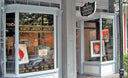
New Orleans, Louisiana
433 Royal Street
504-299-9055
Mon-Sun: 10am - 6pm
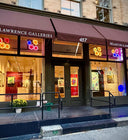
New York, New York
457 West Broadway
212-995-8865
Mon – Sat: 10:00am – 7:00pm
Sun: 11:00am – 7:00pm
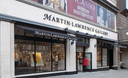
San Francisco, California
366 Geary Street
415-956-0345
Mon-Sun: 10am - 6pm
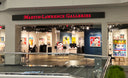
Schaumburg, Illinois
5 Woodfield Mall, Second Level Nordstrom Wing
630-954–3033
Mon – Sat: 10:00am – 9:00pm
Sun: 11:00am – 6:00pm