Fall 2026 Fine Art Catalog Is Here




Beethoven (FS.IIB.390), 1987
Price on Request
Details
Medium: estate stamped unique trial-proof screenprint
Year: 1987
Edition: 177
Sheet size: 40 x 40"
Image size: 40 x 40"
Framed size: 49 x 49"
Signature: signed in pencil on verso by the executor of the Estate of Andy Warhol, the publisher, and the printer on a stamped certificate of authenticity.
Year: 1987
Edition: 177
Sheet size: 40 x 40"
Image size: 40 x 40"
Framed size: 49 x 49"
Signature: signed in pencil on verso by the executor of the Estate of Andy Warhol, the publisher, and the printer on a stamped certificate of authenticity.
About the Work
"Beethoven (FS.IIB.390)" is a unique trial-proof screenprint created by Andy Warhol in 1987. From the edition of 177, the artwork is signed in pencil on verso by the executor of the Estate of Andy Warhol, the publisher, and the printer on a stamped certificate of authenticity. The artwork is framed in a custom closed-corner gold-leaf frame and has a framed size of 49 x 49". The artwork ships framed and accompanied by a certificate of authenticity.
"Beethoven (FS.II.390)," created in 1987, stands as one of Warhols intellectually ambitious and visually compelling late works. Produced during the final year of Warhol’s life, the "Beethoven" series represents a fascinating convergence of high culture and Pop Art, a subject that had occupied the artist throughout his career. By appropriating the image of Ludwig van Beethoven, arguably the most celebrated composer in Western music history, Warhol transformed a figure traditionally associated with artistic genius into a contemporary icon, placing him alongside the celebrities, politicians, and cultural symbols that populated his artistic universe.
This particular example is especially significant as a unique trial proof, a category of Warhol printmaking that is among the rarest and most sought-after by collectors. Unlike the standard editioned works, unique trial proofs were created during the experimental stages of production, as Warhol and his studio explored color combinations, compositional arrangements, and layering effects before finalizing the published image. Each trial proof is unique. No other impression exists with the same combination of colors, overlays, or artistic decisions.
The source image for the "Beethoven" series derives from one of the most recognizable portraits ever created of the composer, based upon the nineteenth-century likenesses that helped establish Beethoven’s enduring public image. By the twentieth century, Beethoven’s stern expression, intense gaze, and wild hair had become visual shorthand for artistic genius itself. His portrait circulated endlessly through textbooks, concert programs, posters, record covers, and popular culture, becoming as universally recognizable as the faces of movie stars or political leaders. It was precisely this transformation, from historical individual to mass-produced cultural symbol, that attracted Warhol’s attention.
Throughout his career, Warhol was fascinated by the ways images acquire meaning through repetition. Marilyn Monroe, Elvis Presley, Mao Zedong, and Queen Elizabeth II all interested him because their identities had become inseparable from the images through which the public encountered them. Beethoven represented a natural extension of this investigation. Although separated by centuries from Warhol’s contemporary celebrities, Beethoven occupied a similar position within the cultural imagination. He was not simply remembered as a composer; he had become a brand, an instantly recognizable symbol of genius, creativity, and artistic achievement.
Warhol’s decision to depict Beethoven in 1987 also reflects his increasing interest in engaging with the broader history of art and culture during the final decade of his career. Works such as "Details of Renaissance Paintings," "The Last Supper," and "Beethoven" reveal an artist looking beyond contemporary consumer culture toward the great icons of Western civilization. Yet rather than treating these subjects with traditional reverence, Warhol subjected them to the same visual processes he had long applied to Hollywood stars and advertising imagery. In doing so, he suggested that cultural greatness itself is mediated through reproduction and mass circulation.
In "Beethoven (FS.II.390)," Warhol pushes this concept even further through a process of visual fragmentation and deconstruction. Overlapping musical notations, geometric forms, and bold fields of color partially obscure the composer’s features, interrupting the clarity of the portrait. Beethoven emerges and recedes simultaneously, his likeness fractured beneath layers of graphic intervention. The effect is both dynamic and deeply conceptual. Rather than presenting a stable historical figure, Warhol reveals Beethoven as a construct, an image assembled through centuries of cultural memory, interpretation, and reproduction.
This strategy reflects one of Warhol’s most sophisticated artistic concerns: the tension between the individual and the image. By disrupting the portrait’s legibility, Warhol challenges viewers to consider how public figures survive in collective consciousness. We do not encounter Beethoven directly; we encounter representations of Beethoven. Through endless reproduction, the historical man becomes inseparable from the visual symbol. Warhol’s layered composition makes this process visible, exposing the mechanisms through which cultural icons are continually remade.
"Beethoven (FS.II.390)" unites Warhol’s lifelong fascination with celebrity, reproduction, and cultural mythology with a subject whose significance transcends popular culture itself. Being a unique trial proof, the work becomes even more exceptional, a one-of-a-kind intersection of artistic experimentation, historical reverence, and Pop innovation. It is a rare opportunity to acquire not merely an image of one of history’s greatest composers, but a singular artwork of Warhol’s final creative chapter, where the worlds of music, art history, and contemporary culture converge in a work of extraordinary rarity and significance.
About the Artist
Beethoven (FS.IIB.390), 1987
Regular price
$685,000.00
SELECTED WORK
MORE FROM THIS ARTIST


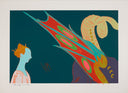
Sidewalk (FS.II.304, Eight by Eight), 1983
Price on Request


Kiku (FS.II.308), 1983
Price on Request
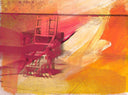
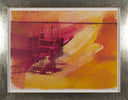
213 - Electric Chair (FS.II.81), 1971
Price on Request


After the Party (FS.II.183), 1979
Price on Request


The Annunciation (FS.II.321, Details of Renaissance Paintings), 1984
Price on Request
Start your collection with guidance you can trust
For nearly 50 years, we’ve helped new collectors find artwork they love and understand the stories behind each piece. Our gallery consultants offer personalized guidance, whether you’re exploring originals, limited editions, or discovering an artist for the first time. Visit your nearest gallery to start collecting with confidence.

Frequently Asked Questions
Your artwork comes with a Certificate of Authenticity (or Letter of Authenticity), professional packaging, and insured delivery.
We ship fully insured, using trusted carriers. Each piece is professionally packed to ensure safe arrival. Shipping times vary based on the location of the art, its destination, and whether or not it is framed (ready to ship) at the time of your purchase.
All our works come beautifully framed. Some print multiples may have framing options if we have unframed editions available in our warehouse. Our in-house framing provides high-quality moulding, acid-free materials and either UV plexiglass or framer’s grade acrylic. High value works may be framed in custom, closed-corner frames, and are often framed in Optium museum glass for enhanced clarity.
No, Martin Lawrence Galleries does not provide appraisal services. To ensure that appraisals are fully independent and unbiased, it is best practice for them to be carried out by certified appraisers who have not had prior involvement with the sale or handling of the artwork. For that reason, we do not appraise artworks that we handle, and instead recommend that collectors seek an independent, certified appraiser.
No, we own the vast majority of our inventory and do not seek out consignments from Sellers.
Yes, if you purchase from a local gallery, your consultant will be happy to assist you with hanging the artwork in your home.
Martin Lawrence Galleries has seven galleries across the country where you may be able to see the exact piece you are interested in. Print and sculpture multiples are more likely to be in several places for possible viewings whereas unique artworks will be constrained to one location. We are happy to facilitate your visit to one of our galleries if that is convenient for you. We can also take videos and extensive photos if a visit is not possible. Please contact us at martinlawrencegalleries.com.
We have over 50 years of experience, seven gallery locations across the United States, and a track record of connecting collectors with the right artwork.
No. Our consultants are here to guide you through the process, answer your questions, and make buying art simple and rewarding.
We encourage you to buy what you love. Our consultants will help you find the right piece that fits your taste and collection.
Please visit our page on specific instructions on how to take care of your artworks. Care Instructions
We stand by our artwork. Please review our detailed return policy here.
OUR GALLERIES

Costa Mesa, California
3333 Bear Street
949-759-0134
Mon–Sat: 11:00am – 8:00pm
Sun: 11:00pm – 6:30pm

Las Vegas, Nevada
3500 Las Vegas Boulevard South
702-991–5990
Sun – Thurs: 10:00am – 11:00pm
Fri – Sat: 10:00am – 12:00am
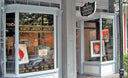
New Orleans, Louisiana
433 Royal Street
504-299-9055
Mon-Sun: 10am - 6pm
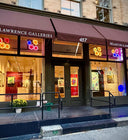
New York, New York
457 West Broadway
212-995-8865
Mon – Sat: 10:00am – 7:00pm
Sun: 11:00am – 7:00pm

San Francisco, California
366 Geary Street
415-956-0345
Mon-Sun: 10am - 6pm
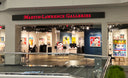
Schaumburg, Illinois
5 Woodfield Mall, Second Level Nordstrom Wing
630-954–3033
Mon – Sat: 10:00am – 9:00pm
Sun: 11:00am – 6:00pm